

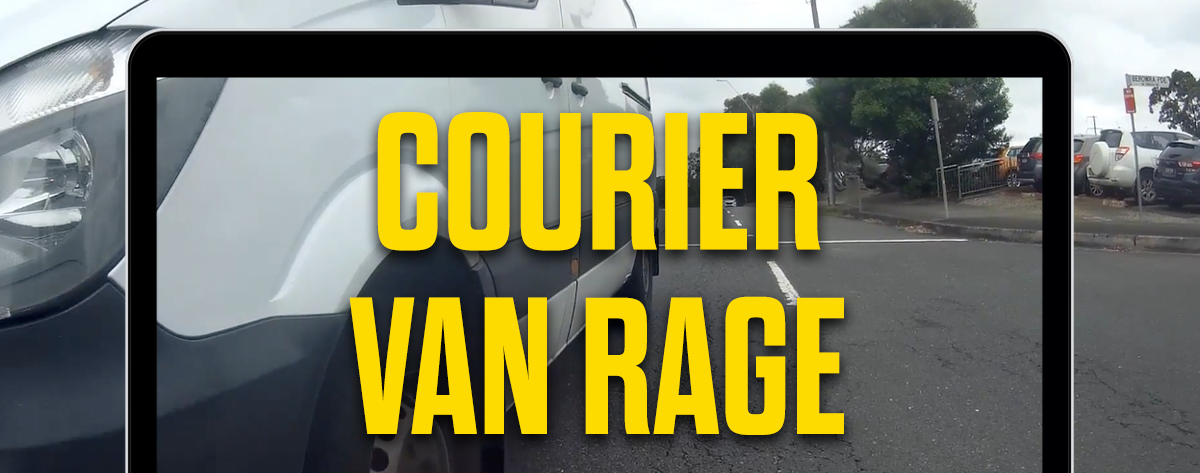
After four decades of cycling in Sydney, UpRider S knows the roads—but nothing prepares you for being intentionally hit by a driver. This disturbing incident was caught on camera, and thanks to the footage, the driver has now been charged. It’s a powerful reminder of why visibility, education, and accountability matter.

Why do you record your ride?
I was travelling southbound on the Pacific Highway, approaching the pedestrian crossing near Berowra Station, which had a red light. The road has three lanes, and as I was in the kerbside lane with a bus parked immediately ahead, I checked that it was clear, indicated, and moved into the middle lane.
I was slowing down and coming to a stop for the light when a courier van approached from behind and used his vehicle to harass me, trying to force me out of the lane. He came within centimetres of me. I put my hand out and pushed off his door to avoid being hit.
When the lights turned green, he continued forward—intentionally turning into me and pushing me over.
I’ve had Cycliq lights since the first beta version, as I usually cycle solo and have found that some drivers try to intimidate lone cyclists. I’ve used the footage to report incidents to the police, with mixed responses.

When do you feel most vulnerable as a cyclist?
I’ve been cycling in Sydney for over 40 years, and in that time, I’ve found that most motorists are considerate. However, I feel most vulnerable during what I call the “tradie hours”—from 5:30 AM to 7:30 AM. This is often when you’re met not only with verbal abuse but also intentional close passes and aggressive behaviour.
It doesn’t matter whether it’s a multi-lane road or a single lane—you have to be constantly aware of both drivers and the road conditions. Sydney’s cycling infrastructure leaves a lot to be desired. There are countless narrow painted cycle lanes, some less than 30 cm wide, often filled with potholes, debris, and other obstacles. These lanes are frequently impassable and unsafe, and frankly, I don’t know who was consulted when they were designed or implemented.
In these situations, I often choose to ride outside of the painted lane, as it feels marginally safer. But doing so almost guarantees a barrage of abuse—and the ever-present threat of a close pass.

What do you think are the most important things that can be done to improve safety for cyclists on the road
The most important factor in improving cyclist safety is driver education.
I hold a Heavy Rigid licence and have a solid understanding of the road rules—and I’m often shocked by what I see on the roads. Drivers need to understand that if they hit and kill a cyclist, the consequences are devastating for everyone involved.
I don’t believe that expensive cycling infrastructure alone is the answer. Education is paramount. Since the introduction of the safe passing distance laws, I’ve noticed some improvement in driver behaviour—but there’s still a long way to go.
I’ve reached out to Cycling Australia and contacted my local NSW Parliament member to explore what more can be done. I also believe that NSW Police should introduce a portal similar to UpRide—one that allows cyclists to submit footage, so authorities can review it and determine whether further action is needed.

Did you report your incident? What was the reporting process?
The incident was reported to police, and they have charged the driver.
What do you think about UpRide?
I’ve only just started to use Upride and find that its very good. It should be used by NSW police in the absence of their own portal.
What is your advice for other cyclists?
Obey the road rules and just be aware that some drivers are not that competent.
Want to share your story?
We’d love to hear from you. If you would like to share your stories and experience as a cyclist please reach out to the UpRide team.