


Some accidents leave more than physical scars. For this UpRider, a routine Saturday morning ride home ended with a brain micro-haemorrhage, weeks of recovery, and a court battle against a driver who denied everything. What followed was a stark lesson in why video evidence isn’t just useful, it’s essential.
Every UpRider has a story. Here is Nicholas’s.
UpRide turns daily rides into data that drives change.
 What happened prior to this incident and why do you record your ride?
I was riding home on a Saturday morning after a group ride. I needed to navigate to the third lane to get to a viaduct. Despite checking my blind spot and signalling with my right hand, I was hit from the rear. I suffered a brain micro-haemorrhage and injuries to my body, arm, and legs. To this day, I have no memory of the 30+ minutes following the accident. I relied solely on my video footage to lodge a police report and file a legal claim against the driver and his insurance.
I use the Cycliq Fly6 and Fly12 because each serves as both a light and a video recorder. As expected, the driver claimed his rental car’s video recorder was malfunctioning and denied that I had hand-signalled my intention to change lanes. He even claimed in his police report that I was the one who crashed into him. Despite having full front and rear video footage, and even with a Traffic Police letter, the court still assigned 10% liability to me – solely because my footage could not definitively prove I had used my right hand to signal. Without the Cycliq, I would have had nothing.
When do you feel most vulnerable as a cyclist?
The other party, the driver, is most likely going to lie. Vehicle drivers will often claim their in-car recorder was not working, and they can easily dispose of or hide their memory card before authorities arrive. It becomes your word against theirs.
In my case, even with both front and rear video, the court in Singapore still awarded 10% liability against me because I could not prove I had signalled my intention to change lanes. And even if I could have proven I did everything right, I was still the one who hit the tarmac and suffered the brain micro-haemorrhage.
What do you think are the most important things that can be done to improve safety for cyclists on the road?
Front and rear video recording is a must. A rear light that can detect approaching vehicles and proactively warn drivers as they close in from behind would also make a real difference. Something else I wish the Cycliq Fly6 and Fly12 had is projected light boundaries on both sides of the cyclist. In Singapore, the 1.5-metre passing gap is only a recommendation, not a law – and it absolutely should be.
Did you report your incident? What was the reporting process?
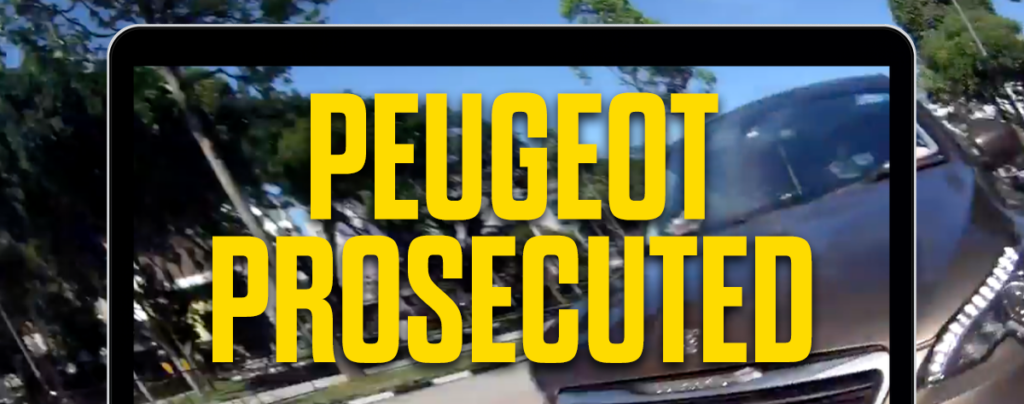
I made a police report online using the video evidence from my Cycliq. I was admitted to hospital for a day, and subsequent medical investigation revealed brain micro-haemorrhages. The matter was referred to a magistrate judge and the driver was charged with ‘Careless Driving without Reasonable Consideration Causing Hurt’ under Section 65(1) of the Road Traffic Act 1961.
What is your advice for other cyclists?
I tell all my cycling friends – we all think an accident will never happen to us, but when it does, we are each on our own if we don’t have evidence. Especially when it is so common to blank out immediately after an accident.
Real UpRides. Real stories.
Submit yours to UpRide.

